Showing posts with label Colonsay. Show all posts

Sunday, 5 June 2011

A Colonsay Abstract


It was something  of a surprise to me to discover the spectacular jagged cliff scenery on the west coast of Colonsay.  The many ledges support strong colonies of seabirds and in a few areas it is possible to get very close.


Guillemots are always interesting to watch en masse on their breeding cliffs.  Quite a few of the birds on these cliffs were ringed and it was possible to read some of them using John's telescope which cranks up to 60x.  Passing these records on, it turns out that all the birds had been ringed at this same spot and one dated from 1993. Not bad, but the oldest known ringed guillemot in the UK was  31 years 9 months 11 days old when it was found dead in 2004.

Guillemots are fine but there is just something about their close cousins the razorbills which I find more appealing.  I think it's the bold black and white plumage together with a more interestingly shaped bill with delicate white lines that gives it the edge in the elegance stakes.


The angle of the light together with the dark nature of the rocks seemed to emphasise their black and white patterns and I rather enjoyed the effects this created if you scrunched your eyes up.  Try it.


Having had a go and failed miserably to capture this effect in a sketch, I reverted to photographs, and ended up with the abstract collage at the top of the post using black and white shots with all the mid tones removed.

Tuesday, 31 May 2011

On the tracks of otters


These are otter prints.  The animal has been bounding along (diagonally left to right in the photo) using the typical bendy movement it shares with its cousins the weasel and the stoat. 

What you see are characteristic clusters of four separate footprints.  First, the left and right front paws hit the ground  slightly out of sync and one in front of the other. As the otter's momentum carries it forward, the body moves over these two prints until the two back paws plonk down beside marks left by the front feet. 
As followers of my previous tracking posts will have guessed by now, I applied my usual techniques of skill and field craft to work this out - which is to say, none whatsoever.  I watched the otter bound by and then went up and had a shufty at the tracks. 
Here is the first bit - front paws hitting the ground, one at the back, the other further forward.  The back legs start to move through.


Then , kerplonk, down go the back feet right beside the front feet  marks but managing not to overlap any of them.

The push off given by the back legs together with its forward momentum, propel the animal quite a way forward such that the next time the front feet hit the ground the animal is far enough away to register a separate and distinct group of four.


With an otter of this size moving at a reasonable pace but not full tilt there is about 9 to 10 inches between the groupings.

The sighting of this otter was just one of those fortuitous things that is bound to come along if you spend enough hours outside in the right places.  Apart from a few tracks and signs it had been an otterless week until the last hour of the last day on Colonsay when I decided to wander along the beach to see off the last ten minutes before heading off to the ferry. I looked up in response to a movement and stood riveted as this otter ran along the top of the beach, not 20 yards away.  Jammy or what!


Monday, 30 May 2011

A Gastropod Ate My Ship


Christopher Columbus got stranded in the Caribbean in 1503 because these things ate his boat.  The Great Shipworm is a mollusc, not a worm, but the 'ship' bit is perfectly correct.

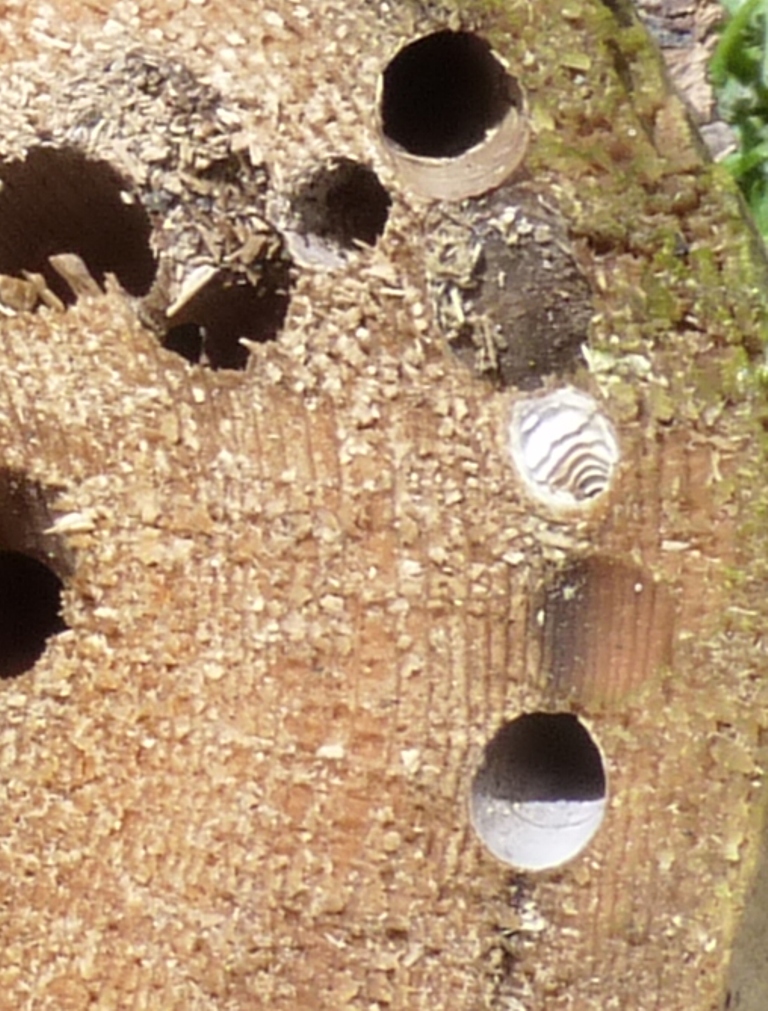
Me and my longtime Hebridean travelling companion, were wandering about on the shores of Colonsay and found these chunks of tree trunk riddled with perfectly machined tunnels about 1 cm in diameter and beautifully lined with a hard chalky material.  Much of the linings had eroded away but you can see it in the bottom right hole in the picture below. Also the hole above that seems to have a sort of calcium divider across it - not sure what is going on there.


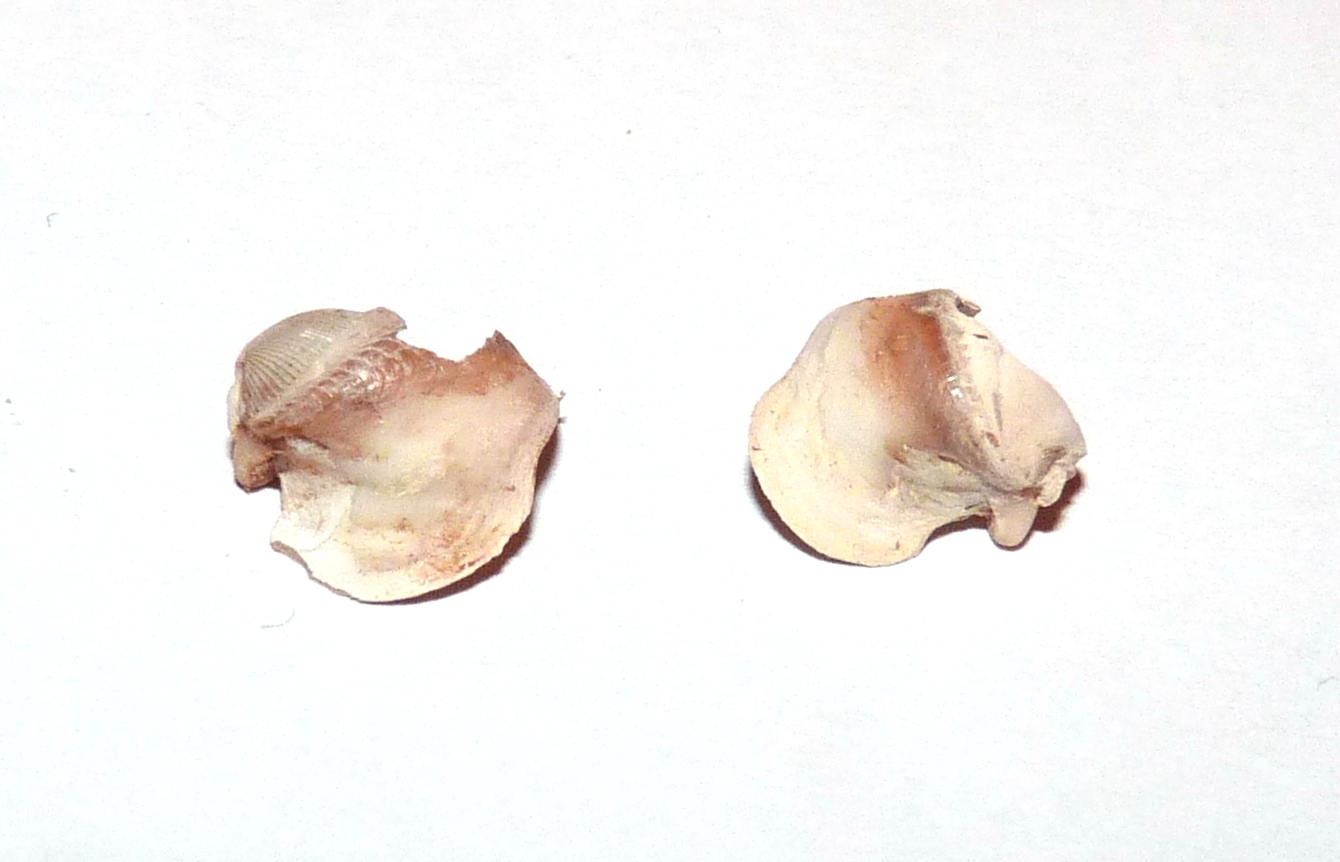
The molluscs themselves were long since gone but some robust bashing and rattling caused some fragments of shell to drop out.


The tunnels are beautifully formed and those we could see were at least 12 cm long. The timber looked just like someone had been messing about with a drill bit.  Allegedly, they keep out of each others tunnels by inter-twining but never breaking through.  Maybe that's the point of the hard calcium lining? Who knows.


The odd thing is that although the animal can grow up to 20 cm in length, its shells (it's a bivalve) are reduced to tiny bits - bit being the operative word - because the shells are at its head end and it does indeed use them as a drill bit, twisting and turning to drill out the tunnel. 
What I can't work out though is what happens when the animal grows.  How does it keep widening out its tunnel when the drill bit is stuck up at the front end at the coal face.  Can it turn round head over heels and double back? Maybe it just concertinas up and shortens itself? In which case how come the entrance doesn't stay narrower than the inner tunnel? And does it wait until it is fully grown before it lines the tunnel? Ach...so many questions?

Some old references say that shipworms do not eat the wood but just use the tunnel as a home. More recent papers revise this and describe special enzymes that the animal produces to break down the cellulose for digestion - so it really does eat ships after all.  And anything else made of wood.

By another of those delightful coincidences I happened to tune in to BBC 2 last night just at the point where they were describing a wreck that had been covered in sediment until recently.  Its a 17th century armed merchant ship known as the Swash Channel wreck.  From fresh as the day it sank to a swiss cheese in no time and they reckon that within another few years it could all be gone . The culprits - the shipworm of course - along with its partner in crime, the fabulously named Gribble (whose wood crunching enzymes, incidentally, are causing a great excitement in the green energy world.)

If you didn't catch 'Britain's Secret Seas' have a look on the BBC i-player (here) and zip through to the 28th minute for a 5 minute piece including some great samples and photos together with an x-ray of the beast in its burrow.

I also read that in the Baltic Sea, where archaeologists have discovered 100s of  really old and important wooden vessels, shipworms have always been absent and not a concern.  However, in recent times they have begun to appear and are now munching their way through a smörgåsbord of delicious wrecks.  I suppose the real reason is not fully understood but as shipworms don't survive in colder water, a presumption has been put about that that old devil called global warming is behind this, through a rise in sea temperature. Could just be that old devil called evolution of course but the change does seem rapid.

Which is to say - there's more to a hole in a piece of driftwood than first meets the eye. 

Saturday, 28 May 2011

Saviour of the Human Pace


In my frantic world of work, where the insatiable email monster whips up expectations of responses to everything at the speed of light or faster, it's so easy to find yourself disconnected from the natural human pace and rhythm.  A bit like city kids having no concept of the real night sky. So, how do you recalibrate your system back to human pace without crashing and needing a talking-therapy reboot?  

I offer two foolproof options.  First, try repeating the mantra of that well know philosopher and all round deep thinker, King Louie, in the Jungle Book film - 'Cool it, boy. Unwind yourself.'  Alternatively, spend a week or more on a small Hebridean island.

The one I've just been to does nicely.  No terrestrial telly signal, a mobile that wouldn't work, one loop of single track twisty road where no-one can really top 20mph.  Even the ubiquitous Caledonian MacBrayne ferries don't visit every day. Then from that imposed slow baseline, go out all day, every day and get some proper awful weather catapulted into your face by a deepening Atlantic depression. By, it works a treat - as you can tell by this chipper CalMac ferry deck hand.


So for the next few posts I'll up-sticks from my usual NE England base to Colonsay. The glamorous end (choughs, corncrakes, otters and stuff like that) can wait. This was one of our most intriguing finds.


More next time.....